Egg freezing at a glance
| Procedure duration | Around 2–3 weeks |
| Anaesthesia | Sedation for egg retrieval |
| Hospital stay | Day procedure |
| Downtime | Usually 1–3 days after retrieval |
| Storage | Long-term cryopreservation |
| Ideal time | Generally before fertility declines |
How does egg freezing work?
Egg freezing is a multi-step process that typically takes around 2 to 3 weeks, beginning with ovarian stimulation and ending with the freezing of mature eggs. Throughout the process, your fertility specialist will monitor your response to treatment and adjust your care accordingly.

The egg-freezing process involves ovarian stimulation, monitoring, egg retrieval, vitrification and storage, allowing mature eggs to be preserved for possible future IVF treatment.
- Ovarian stimulation – Unlike a natural menstrual cycle, where only one egg usually matures, hormone injections are used to stimulate the ovaries to produce multiple mature eggs. These injections are typically given daily for around 8 to 12 days.
- Monitoring – During this period, several appointments for ultrasound scans and blood tests will be scheduled. These allow your fertility specialist to monitor follicle development and determine the optimal time for egg retrieval.
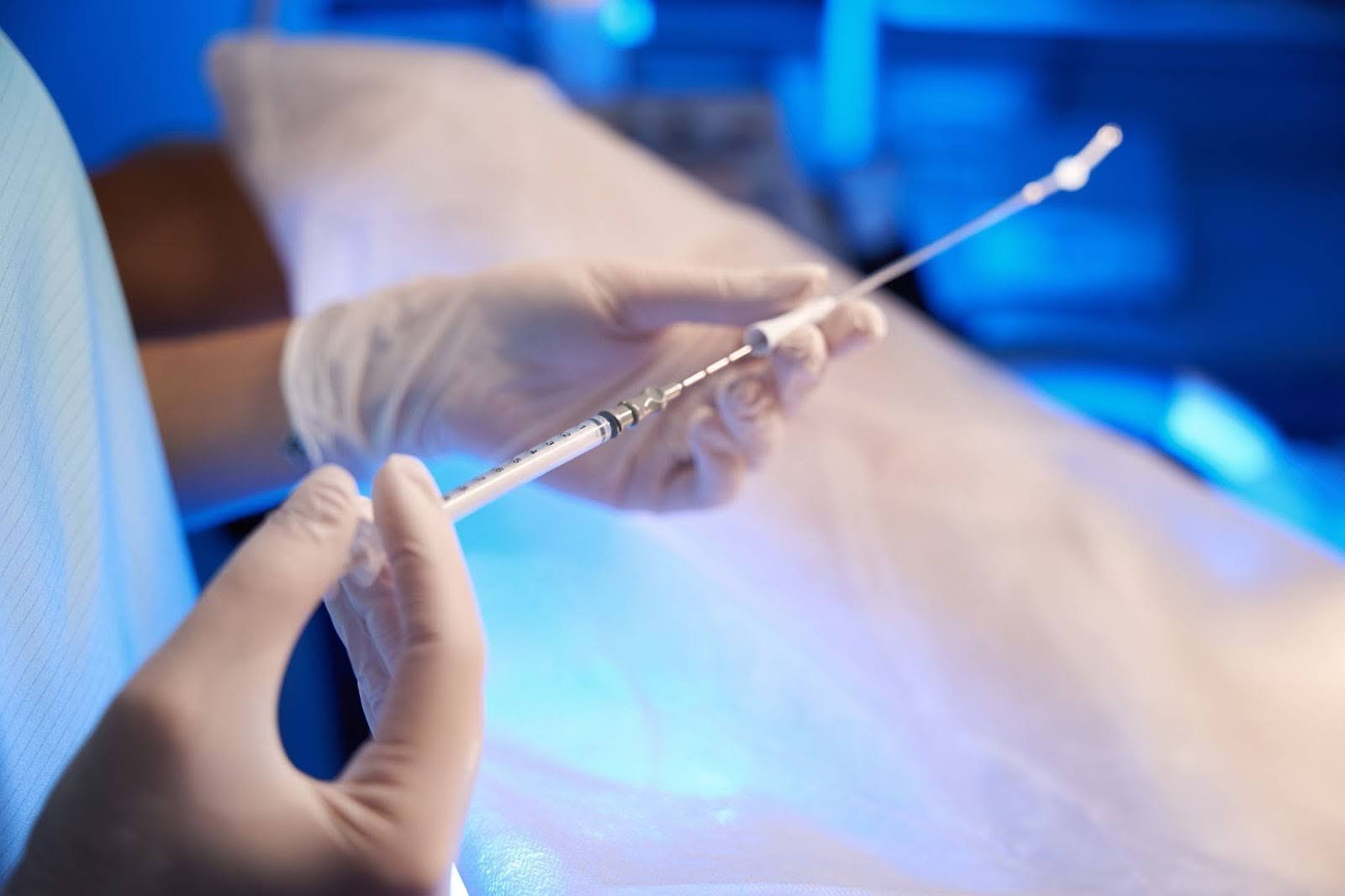
- Egg retrieval – Once the eggs have matured, a trigger injection is administered to prepare them for collection. About 34 to 36 hours later, the eggs are retrieved using a fine needle guided by ultrasound through the vaginal wall. The procedure is usually performed under sedation or anaesthesia and typically takes around 20 to 30 minutes.
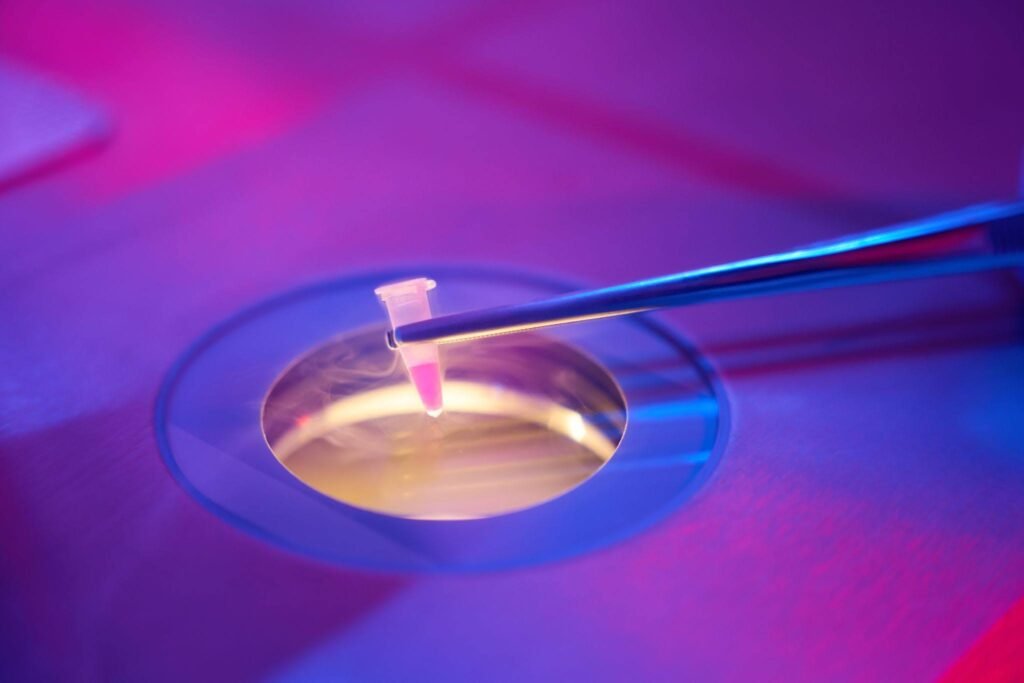
- Freezing and storage – The retrieved eggs are assessed in the laboratory, and mature eggs are rapidly frozen using a technique called vitrification. They are then stored in specialised cryogenic tanks until they are needed in the future.
- Using eggs in the future – When you decide to try for pregnancy, the frozen eggs are thawed and fertilised with sperm through in vitro fertilisation (IVF). If suitable embryos develop, one or more may then be transferred into the uterus in an attempt to achieve pregnancy.
Why do women freeze their eggs?
Women choose to freeze their eggs for a variety of personal and medical reasons.
| Elective (Social) Egg Freezing | Elective egg freezing refers to preserving fertility for non-medical reasons. It allows women to freeze their eggs while they are younger, even if they are not yet ready to have children.
Some women may choose elective egg freezing because they:
|
| Medical Egg Freezing | Medical egg freezing may be recommended when a woman is at risk of losing fertility due to a medical condition or treatment. Preserving eggs before treatment may improve the possibility of having biological children in the future.
Examples include:
|
Dr Tan Heng Hao can assess your ovarian reserve, medical history and reproductive goals to determine whether egg freezing is appropriate for your individual circumstances.
Who is eligible for egg freezing in Singapore?
In Singapore, elective egg freezing is available to women who meet the eligibility criteria set by the Ministry of Health (MOH). Women must be at least 21 to 37 years old (that is, up to 37 years of age) at the time ovarian stimulation begins. The procedure is available to both single and married women and must be performed at a licensed assisted reproduction centre.
Women who require medical egg freezing, such as before undergoing chemotherapy or other fertility-impacting treatments, may also be eligible. The eligibility criteria and treatment recommendations depend on the individual’s medical condition and should be discussed with a fertility specialist.
Can women over 37 freeze their eggs?
In certain circumstances, women who are slightly above the upper age limit may be able to appeal to the Ministry of Health. These appeals are assessed on a case-by-case basis, taking into account the individual’s circumstances and medical assessment.
Why does age matter when it comes to egg freezing?
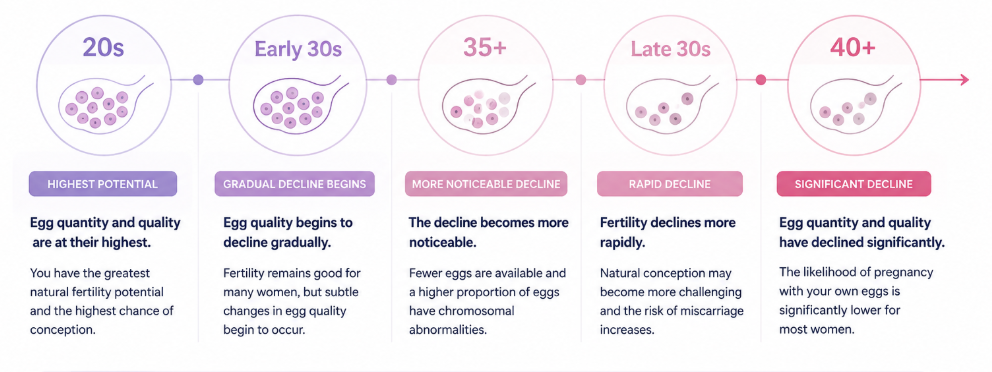
Female fertility changes gradually with age. While egg quantity and quality are generally highest in a woman’s 20s, both decline over time, with a more noticeable decrease after age 35. Egg freezing preserves eggs at the age they are collected.
Age is one of the most important factors influencing the potential success of egg freezing. This is because women are born with all the eggs they will ever have, and both the number and quality of these eggs naturally decline over time.
While fertility varies between individuals, the decline becomes more noticeable from the mid-30s onwards. As egg quality decreases, there is a higher chance of chromosomal abnormalities, which can reduce the likelihood of successful fertilisation, healthy embryo development and pregnancy.
Freezing eggs at a younger age preserves them at their current biological age. This means that eggs frozen earlier generally have a better chance of surviving thawing, fertilising successfully and developing into healthy embryos compared with eggs frozen later in life.
However, age is only one part of the picture. Factors such as ovarian reserve, overall reproductive health and future family goals should also be considered when deciding whether egg freezing is appropriate.
| A note from Dr Tan Heng Hao:
The decision to freeze your eggs should not be based on age alone. A fertility assessment can provide a better understanding of your ovarian reserve and help determine whether egg freezing aligns with your individual circumstances. |
How is fertility assessed before egg freezing?
Before undergoing egg freezing, you will have a consultation with a fertility specialist to evaluate your reproductive health and determine whether the procedure is suitable for you. This assessment also helps estimate how your ovaries may respond to treatment and allows a personalised treatment plan to be developed.
Medical history
Your fertility specialist will review your medical and reproductive history, including:
- Age
- Menstrual cycle regularity
- Previous pregnancies
- Medical conditions and medications
- Previous pelvic or ovarian surgery
- Family history of early menopause or fertility problems
- Your future family planning goals
Ovarian reserve testing
Tests to assess your ovarian reserve may include:
- Anti-Müllerian hormone (AMH) blood test — AMH is a hormone produced by the small follicles in the ovaries. Measuring AMH levels helps estimate the number of eggs remaining (ovarian reserve) and how the ovaries may respond to stimulation during an egg-freezing cycle
- Transvaginal ultrasound — A transvaginal ultrasound is performed to assess the ovaries and count the number of small resting follicles, known as the antral follicle count (AFC). Together with the AMH result, this helps estimate ovarian reserve and guides the choice of medication and stimulation protocol.
Additional investigations
Depending on your medical history and individual circumstances, your fertility specialist may also recommend additional blood tests or health screening before treatment to ensure it is safe to proceed.
What are the risks of egg freezing?
As with any medical procedure, egg freezing carries some risks. Fortunately, it is generally considered a safe procedure when performed by an experienced fertility specialist.
Most women experience only temporary side effects, such as mild bloating, cramping, spotting or pelvic discomfort following ovarian stimulation or egg retrieval. Less commonly, complications such as bleeding, infection or ovarian hyperstimulation syndrome (OHSS) may occur.
Your fertility specialist will carefully monitor every stage of your treatment, adjusting medications when necessary and taking appropriate precautions to help minimise the risk of complications.
What happens when you want to use the eggs?
When you are ready to try for pregnancy, your frozen eggs are carefully thawed in the laboratory. Eggs that survive the thawing process are then fertilised with sperm through in vitro fertilisation (IVF), often using a technique called intracytoplasmic sperm injection (ICSI), where a single sperm is injected directly into each mature egg.
The fertilised eggs are monitored as they develop into embryos over the following days. If one or more healthy embryos develop, a suitable embryo can be transferred into the uterus in an attempt to achieve pregnancy.
It is important to understand that not every frozen egg will survive thawing, fertilise successfully or develop into a healthy embryo. Similarly, not every embryo will implant successfully or result in a live birth. The chances of success depend on several factors, including the woman’s age when the eggs were frozen, the number and quality of eggs stored, sperm quality and overall reproductive health.
How long can eggs be stored?
Frozen eggs are stored in specialised cryogenic tanks at extremely low temperatures using liquid nitrogen. Under these conditions, biological activity is effectively paused, allowing the eggs to remain preserved for many years without continuing to age. Studies suggest that properly frozen eggs do not significantly deteriorate simply because they have been in storage for a longer period.
In Singapore, elective egg freezing is offered only by licensed assisted reproduction centres, which are required to comply with strict regulatory standards for storage, including continuous temperature monitoring, backup power supplies and quality management systems to help ensure the eggs remain safely preserved. Licensed providers are also subject to routine inspections by the Ministry of Health.
While the eggs themselves remain at the biological age at which they were frozen, it is important to remember that the body continues to age. As a result, factors such as overall health and pregnancy-related risks at the time you decide to use the eggs may still influence treatment outcomes.
Cost of egg freezing in Singapore
The cost of egg freezing in Singapore varies depending on several factors, including the fertility centre, the type and dosage of hormone medications required, the number of monitoring appointments, laboratory and procedural fees, and whether more than one egg-freezing cycle is recommended to achieve the desired number of frozen eggs.
During your consultation, your fertility specialist will discuss the expected costs based on your individual treatment plan, explain what is included, and provide a personalised cost estimate before treatment begins.
MediSave or government subsidies
For elective (social) egg freezing, the procedure is generally self-funded. Government subsidies and MediSave are not available for elective egg freezing itself. However, medical egg freezing performed for recognised medical indications (such as before cancer treatment) may be eligible for MediSave, subject to prevailing regulations and withdrawal limits.
What are the chances of having a baby from frozen eggs?
No fertility treatment can guarantee a future pregnancy or live birth, and egg freezing is no exception. The likelihood of having a baby from frozen eggs depends on several factors, including:
- Your age when the eggs were frozen — Younger eggs generally have a higher chance of surviving thawing, fertilising successfully and developing into healthy embryos.
- The number of mature eggs stored — Having more mature eggs available may increase the overall chance of achieving a future pregnancy.
- Egg and sperm quality — Healthy eggs and sperm are both important for successful fertilisation and embryo development.
- Embryo development — Not every fertilised egg will develop into a healthy embryo suitable for transfer.
- Your reproductive health at the time of treatment — Factors such as uterine health and other fertility conditions can also influence the chances of pregnancy.
It is also important to remember that not every frozen egg will complete each stage of the treatment process.
Egg freezing vs Embryo freezing
Both egg freezing and embryo freezing are forms of fertility preservation, but they differ in when fertilisation takes place. The most suitable option depends on factors such as whether you currently have a partner or sperm donor, your reproductive goals and your personal circumstances.
| Egg Freezing | Embryo Freezing |
| Stores unfertilised eggs | Stores eggs after fertilisation |
| Does not require sperm at the time of freezing | Requires sperm to create embryos |
| May provide greater flexibility over future sperm source | Provides more information about fertilisation and embryo development |
| Future outcomes remain uncertain until eggs are thawed and fertilised | Embryo development has already been observed before freezing |
| Use remains subject to prevailing assisted reproduction rules | Use remains subject to prevailing assisted reproduction rules |
Why visit a fertility specialist?
Whether you are actively considering egg freezing or simply want to better understand your fertility, consulting a fertility specialist can provide valuable information to support your decision-making.
During a consultation, your fertility specialist will review your medical and reproductive history, assess your ovarian reserve and discuss your future family-building goals. This allows for personalised advice on whether egg freezing is appropriate, the timing of treatment and the outcomes you may realistically expect based on your individual circumstances.
Importantly, a fertility assessment does not mean you have to proceed with egg freezing. Rather, it gives you a clearer understanding of your fertility so you can make an informed decision with confidence.
At Majella, our Fertility Specialist Dr Tan Heng Hao believes that every fertility journey is unique. Whether you are exploring your options, planning for the future or facing a medical condition that may affect fertility, we are here to provide personalised, evidence-based care and guide you through every step of the process.
Egg freezing in Singapore

Planning for the future: Egg freezing allows women to preserve their fertility while keeping their future family-building options open.
Deciding whether to freeze your eggs is a deeply personal decision, and there is no single “right” choice for everyone. Understandably, many women want to give themselves the best possible opportunity to build a family when the time feels right. Learning about your fertility early can help you make informed decisions with greater confidence, whether you choose to freeze your eggs or not.
We understand that every fertility journey is unique. Whether you are considering delaying parenthood, have concerns about your fertility or are exploring your options before medical treatment, Dr Tan provides personalised, evidence-based care tailored to your individual circumstances. Schedule a consultation to discuss your fertility, understand your options and determine whether egg freezing is right for you.
Frequently Asked Questions
Can all Singaporean women undergo egg freezing?
Singapore permits elective egg freezing for women aged 21 to 37, regardless of marital status. Women above 37 may submit an appeal, which the Ministry of Health assesses individually; MOH reported in April 2026 that about 70% of approximately 40 annual appeals had been approved.
How many eggs should you freeze?
There is no ideal number of eggs that guarantees a future pregnancy. The number recommended depends on factors such as your age, ovarian reserve and the number of children you hope to have.
Will one egg-freezing cycle be enough?
It depends on how your ovaries respond to treatment and how many mature eggs are retrieved. While some women achieve their desired number of frozen eggs after one cycle, others may benefit from additional cycles.
Does freezing my eggs mean I can guarantee a baby later?
Egg freezing cannot guarantee that you will have a baby in the future. Instead, it preserves a number of unfertilised eggs at the biological age when they were collected, giving you an additional opportunity to try for pregnancy later.
Not every frozen egg will survive thawing, fertilise successfully or develop into an embryo capable of resulting in a live birth. Your chances depend on factors such as your age when the eggs were frozen, the number of mature eggs stored and your reproductive health when you eventually use them. Egg freezing is therefore better understood as a form of fertility preservation and not an insurance policy or guaranteed backup plan.
When does egg quality start to decline?
Female fertility changes gradually rather than suddenly. Egg quality is generally highest in a woman’s 20s and begins to decline in the early 30s. After the age of 35, the decline becomes more pronounced, with a greater proportion of eggs developing chromosomal abnormalities that can reduce the chances of pregnancy and increase the risk of miscarriage. The decline typically accelerates further in the late 30s.
Because egg freezing preserves eggs at the age they are collected, many women choose to undergo the procedure before this more rapid decline occurs.
Is Egg Freezing Painful?
Most women tolerate egg freezing well. The hormone injections used during ovarian stimulation are administered using a small needle and are generally associated with only mild discomfort. Some women may experience temporary bloating, cramping or pelvic discomfort as the ovaries enlarge.
Egg retrieval is performed under sedation or anaesthesia, so you should not feel pain during the procedure. Mild cramping or spotting afterwards is common and usually resolves within a few days.
Is Egg Freezing Safe?
Yes. Egg freezing is generally considered a safe procedure when performed by an experienced fertility specialist.
As with any medical procedure, there are some risks, including bleeding, infection and ovarian hyperstimulation syndrome (OHSS). However, your fertility specialist will carefully monitor your response to treatment and take appropriate precautions to help minimise the risk of complications.
Can I Still Get Pregnant Naturally After Freezing My Eggs?
Yes. Freezing your eggs does not reduce your ability to conceive naturally in the future.
Many women continue trying to become pregnant naturally after egg freezing. Frozen eggs are typically only used if natural conception is unsuccessful or if you decide to use them at a later stage.